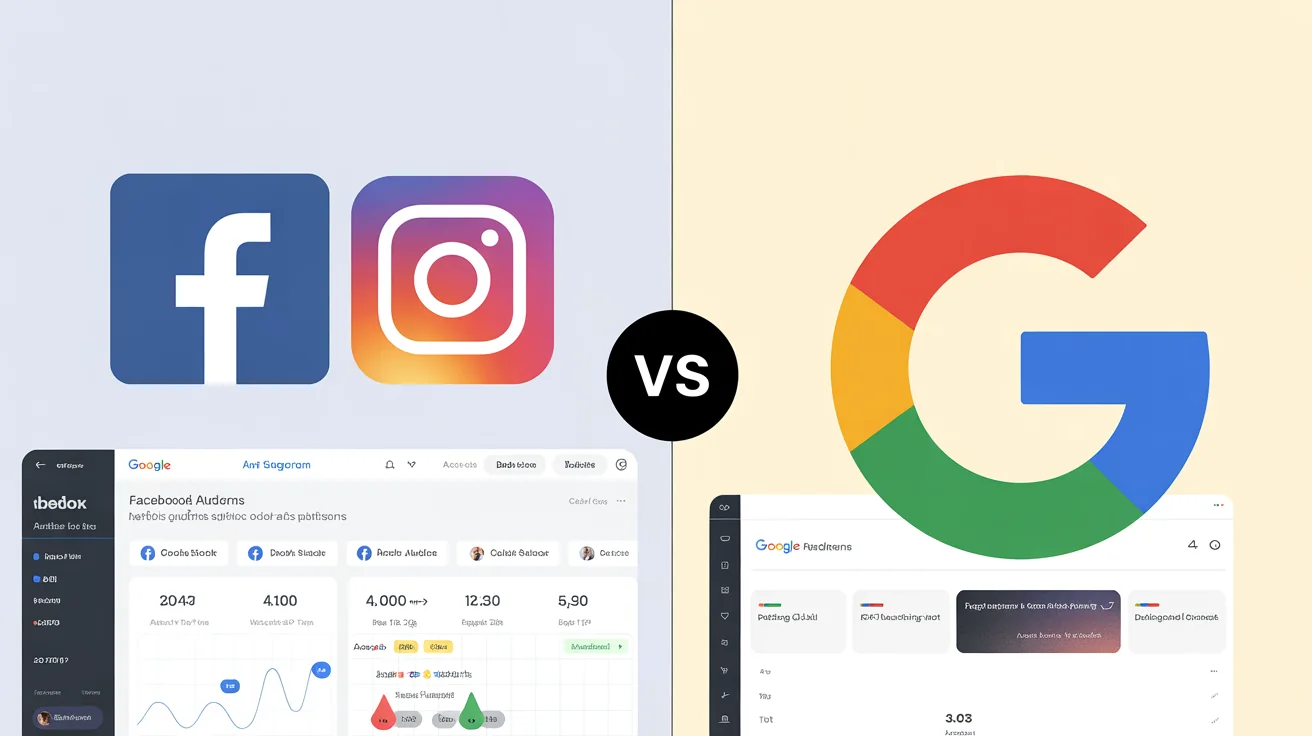
Two platforms dominate the paid advertising landscape: Meta (Facebook and Instagram) and Google. Both offer powerful tools for reaching your target audience, but they work in fundamentally different ways. Understanding these differences is key to choosing the right platform for your business — or better yet, using both strategically.
How They Differ: Intent vs. Interest
The fundamental difference between Google Ads and Meta Ads comes down to user intent:
- Google Ads captures people with active purchase intent. When someone searches for "best plumber near me" or "buy running shoes online," they're actively looking to make a purchase or hire a service.
- Meta Ads targets people based on demographics, interests, and behaviors. You're reaching people who fit your ideal customer profile but may not be actively searching for your product right now.
This means Google Ads tends to drive more immediate conversions, while Meta Ads excels at building awareness, generating demand, and reaching new audiences.
When to Use Google Ads
Google Ads is typically the better choice when:
- Your customers actively search for your products or services online
- You want to capture high-intent traffic that's ready to buy
- You offer solutions to specific problems people are searching for
- You want to appear at the top of search results immediately
- You're in a local service business (plumber, dentist, lawyer, etc.)
When to Use Meta Ads
Meta Ads is typically the better choice when:
- Your product is visually appealing (fashion, food, lifestyle, etc.)
- You want to build brand awareness and reach new audiences
- Your target audience can be defined by demographics or interests
- You have compelling visual content (images, videos)
- You want to retarget website visitors or existing customers
- You're launching a new product or entering a new market
Targeting Capabilities Compared
Google Ads offers keyword-based targeting (you choose which search terms trigger your ads), geographic targeting, device targeting, and audience targeting based on browsing behavior.
Meta Ads offers incredibly detailed audience targeting: age, gender, location, interests, behaviors, life events, job titles, and more. Plus, you can create Lookalike Audiences to find people similar to your best customers.
Budget Considerations
The cost structure differs between platforms:
- Google Ads: Cost-per-click varies widely by industry and keyword. Competitive keywords can cost $5-50+ per click, but the conversion rates are typically higher.
- Meta Ads: Generally lower cost-per-click ($0.50-$3.00 on average), but may require more touchpoints to convert since users aren't in active search mode.
The key metric isn't cost-per-click — it's cost-per-acquisition. A $20 click on Google that converts 10% of the time may be more cost-effective than a $1 click on Meta that converts 0.5% of the time.
The Best Strategy: Use Both
The most successful businesses don't choose between Google and Meta — they use both strategically:
- Use Google Ads to capture demand from people actively searching
- Use Meta Ads to create demand by reaching new audiences
- Use Meta retargeting to re-engage Google Ads visitors who didn't convert
- Test new offers and messaging on Meta before scaling on Google
- Align both platforms with your SEO strategy for maximum coverage
The Bottom Line
Both Google Ads and Meta Ads are powerful tools that serve different purposes. The right choice depends on your business type, goals, audience, and budget. For most businesses, a balanced approach using both platforms delivers the best overall results. At MRKT247, we're both Google Certified and Meta Certified, so we can help you build an integrated strategy that maximizes your advertising investment.