
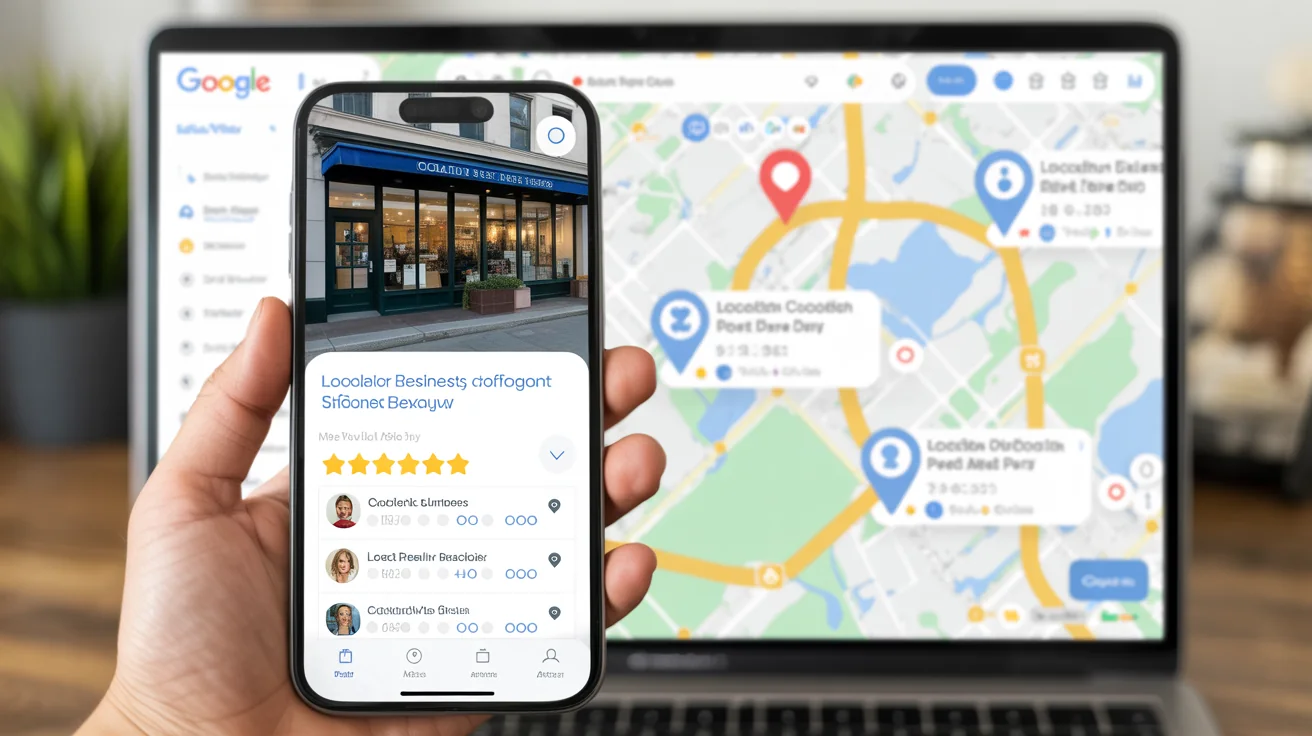
Local SEO and Google Maps SEO overlap, but they are not interchangeable. Google Maps optimization focuses on how an eligible business is represented and discovered through its Google Business Profile and map results. Local SEO includes that work and the wider website, content, listings and local relevance that help customers find and evaluate the business.
This distinction matters when buying a marketing service. A proposal that only updates a profile is different from one that also repairs a website, improves service pages and tests the enquiry path. Both can be useful, but the scope should be explicit so the business knows what is being delivered and what remains outside the engagement.
What Google Maps optimization covers
Map-focused work begins with a legitimate, eligible profile. It includes accurate business information, appropriate categories, current hours, useful photographs and an ethical approach to reviews. It can also include checking duplicate listings, correcting a map pin and ensuring the website link leads to the right destination.
The work is grounded in reality. A profile should describe the business as it exists, not as a collection of keywords. A service-area setting is not a tool for creating a physical presence across an entire region. Distance remains a real constraint on local discovery.
What broader local SEO adds
The website can explain details that a profile cannot fully cover: who the service is for, what the process includes, how estimates work, where the business genuinely travels and what customers should prepare before contacting the team. Technical SEO helps those explanations remain crawlable and usable.
Broader work can also include correcting important business listings, earning relevant local mentions and connecting useful articles to commercial pages. It should not mean buying hundreds of low-value citations or publishing a page for every nearby place without meaningful content.
Two destinations, one customer journey
A customer might find a map listing, open the website to check a service, return to reviews and then call. Another might discover a helpful article and later search for the business by name. Treating profile and website work as disconnected projects can produce inconsistent messages at those transition points.
How to diagnose which area needs attention
If the profile has incorrect hours, a wrong phone number or duplicate records, fix those accuracy problems first. If customers reach the website but cannot understand the offer or submit a form, website improvements are urgent. If the business is not eligible for a profile, focus on legitimate website visibility rather than fabricating a location.
Also ask whether the website contains distinct service pages. Sending every visitor to a broad homepage may leave a specific query unanswered. A page about one service can explain suitability, process and next steps more clearly than a general list of everything the company does.
A useful comparison of deliverables
- Profile accuracy: real name, eligible location or service-area configuration, contact details and hours.
- Website relevance: useful service descriptions, genuine location context and descriptive internal links.
- Technical access: working pages, sensible canonicals, an accurate sitemap and mobile usability.
- Reputation: honest feedback requests and professional responses without incentives or gating.
- Conversion: clear contact choices, reliable forms and an appropriate follow-up process.
- Measurement: consistent reporting that distinguishes visibility, enquiries and qualified opportunities.
A proposal should identify which of these areas is included. Ask who implements website changes, who approves public information and how progress will be measured. That is more useful than comparing packages based only on the number of keywords or directory submissions.
Use location pages responsibly
A location page should explain the actual relationship between the business and that market. It can discuss coverage, relevant service situations, access considerations and customer questions. It should not imply a branch office merely because the business accepts clients from that city.
For a provider serving several areas, link the main service explanation to useful regional context. Our Local SEO service page connects to existing city pages such as Vancouver and Edmonton. The purpose is to help a visitor understand relevance, not to create a new business entity in each location.
Reviews and listings support trust, not shortcuts
Reviews are useful when they reflect genuine customer experience. Accurate listings help people identify and contact the business. Neither should become a volume exercise divorced from quality. A smaller set of correct, relevant profiles is more useful than a large collection of outdated records.
Do not promise that a certain number of reviews guarantees a map position. Google's local ranking documentation describes relevance, distance and prominence; no single task overrides the whole system. Business owners should be wary of guarantees based on one isolated tactic.
Measure both parts without double-counting
Profile interactions and website enquiries can represent stages of the same journey. A person who clicks from Maps and submits a form should not automatically become two leads in the report. Define what counts as a unique enquiry and what qualifies it as a sales opportunity.
When a report shows improved visibility, ask where, for which queries and over what period. When it shows more leads, ask whether they were relevant and whether tracking changed. These questions help distinguish an actual business improvement from a measurement artefact.
How to choose the right next step
Begin with a combined assessment, even if the first implementation focuses on one area. Accuracy problems may require immediate profile work, while broken forms may require website work first. Content gaps and local relevance can then be prioritized around commercially important services.
Read why Google Maps optimization matters for a profile maintenance checklist and our technical SEO guide for website access issues. If you need help defining scope, request a local SEO assessment. A good plan should explain how profile work and website work support the same customer journey.